Self-play
Search can teach the model in two ways: its games become training decisions, and policy rollouts provide measured winrates for the judge.
~10k
37.8M+
Direct gameplay training
We generated roughly 10,000 searched games on an NVIDIA RTX 3090, repacked them into decisions, and fine-tuned the existing model. This turns stronger play into a training signal for the next generation.
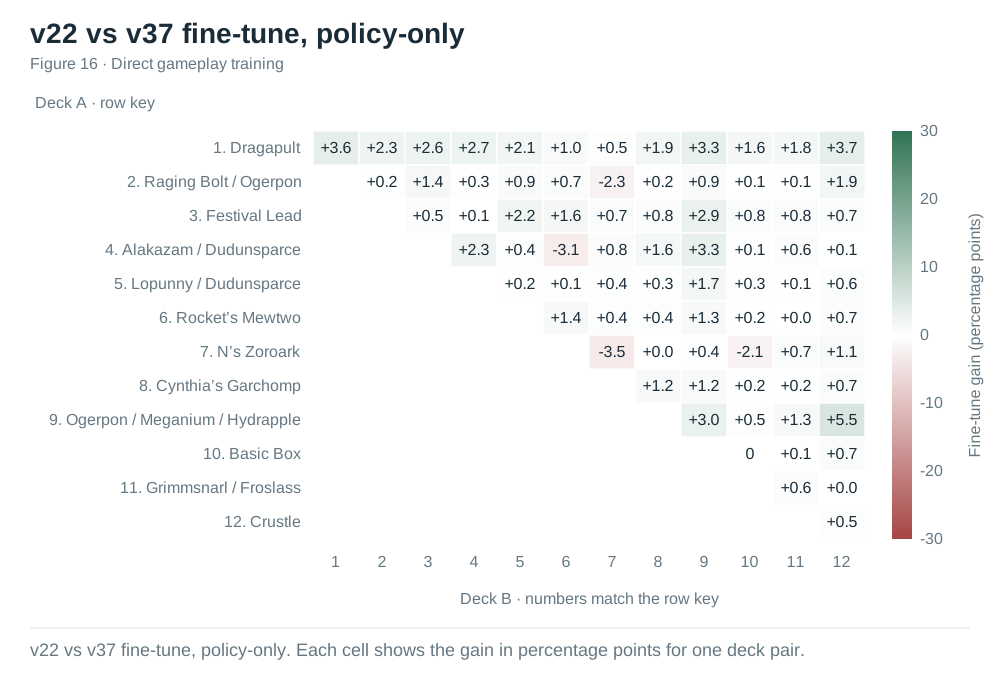
Early rules pruned weak lines and suggested alternatives without overriding evaluation. As the model learned those behaviors, we removed the rules with no loss in performance.
Winrate gains were modest over the two rounds we could afford. They suggest a process that may compound, but do not yet establish a long-run scaling trend.
Winrate approximation training
The judge also has a direct target: measured outcomes from a position. This method labels policy-only playouts rather than mining searched games.
- Select positions from policy-only self-play.
- Fork each selected position 1,000 times with different random seeds.
- Play each fork to completion with the policy and record its winrate.
- Train the judge toward that measured winrate.
GPU batching makes this far cheaper than mining searched games. We labeled over 37.8 million positions, reducing the judge’s mean prediction error by roughly 2 percentage points.
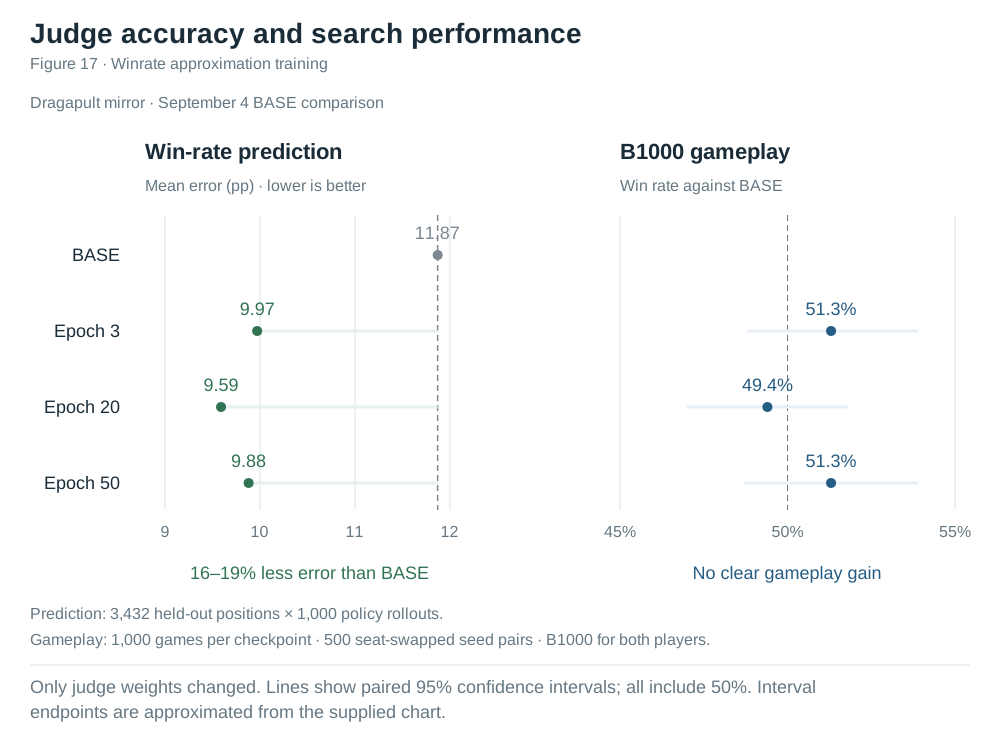
We observed no clear strength gain in searched gameplay. We hypothesize this is due to insufficient scale. Even with 37.8 million positions played out, they originated from only 37,800 root positions. We believe this is not enough data to avoid overfitting, and therefore plan to continue this experiment.
With sufficient compute, we believe this method can scale up significantly. Labeling millions or billions more positions can improve judge accuracy more, which improves search recommendations. Whether or not this method is more efficient than mining search gameplay remains to be seen.
See Search for how the judge guides planning, and Performance for the post-deadline model comparison.