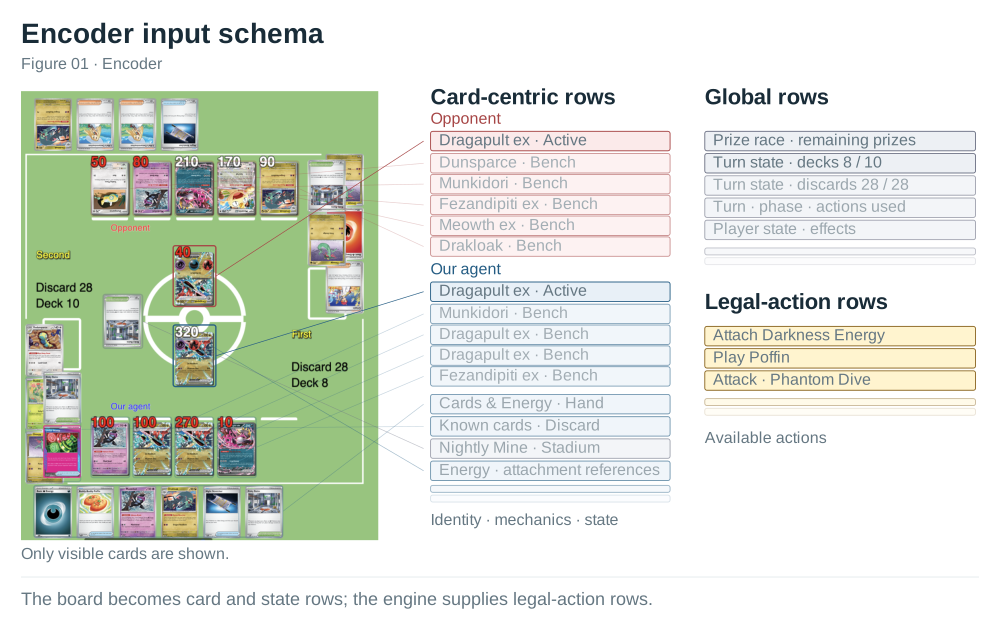
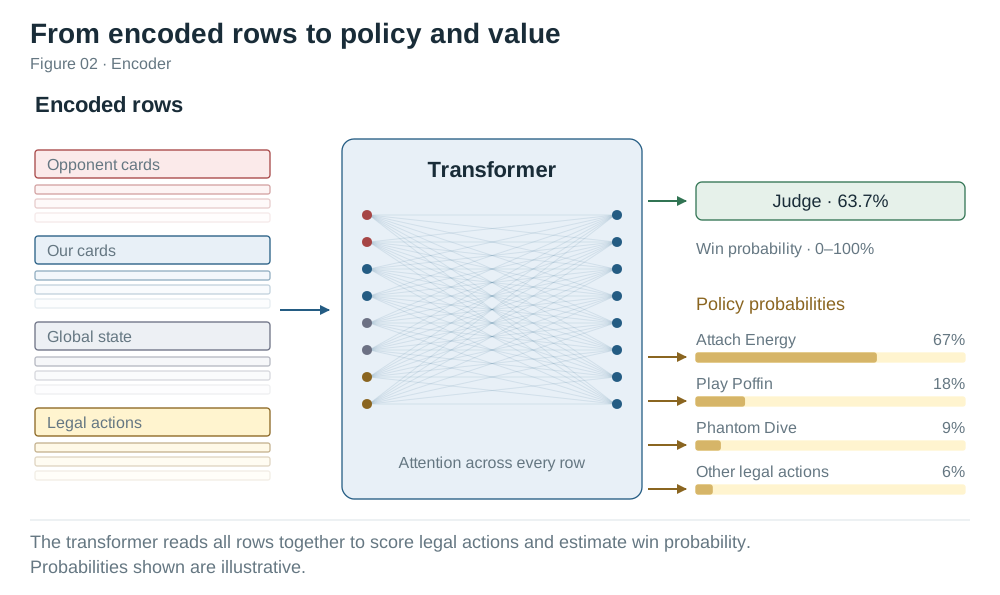
Every card is a composition of mechanical primitives. A transformer reads the whole board as a set of rows and returns a policy and a value.
194
features a card’s printed text alone determines
3
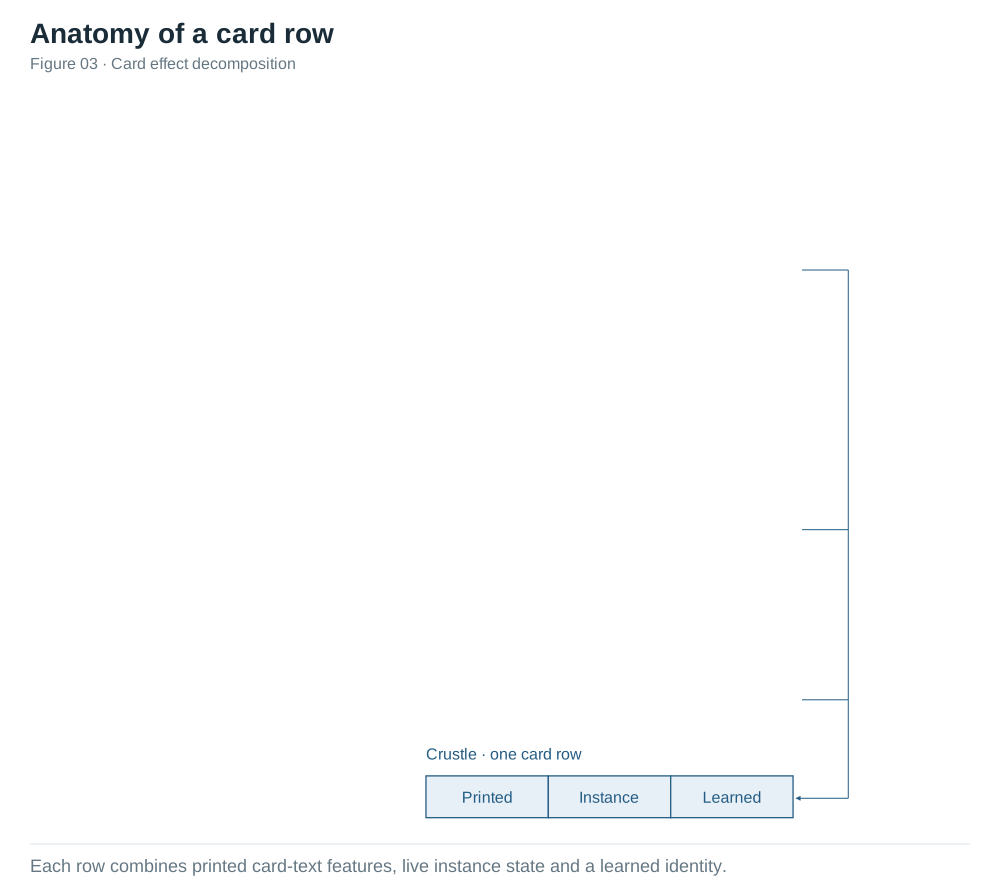
segments in a card row: printed, instance, learned
Encoder
The board, legal actions, and global context form an unordered set of rows. Attention connects the whole position; separate heads return action scores and the judge’s estimated win probability.
Card effect decomposition
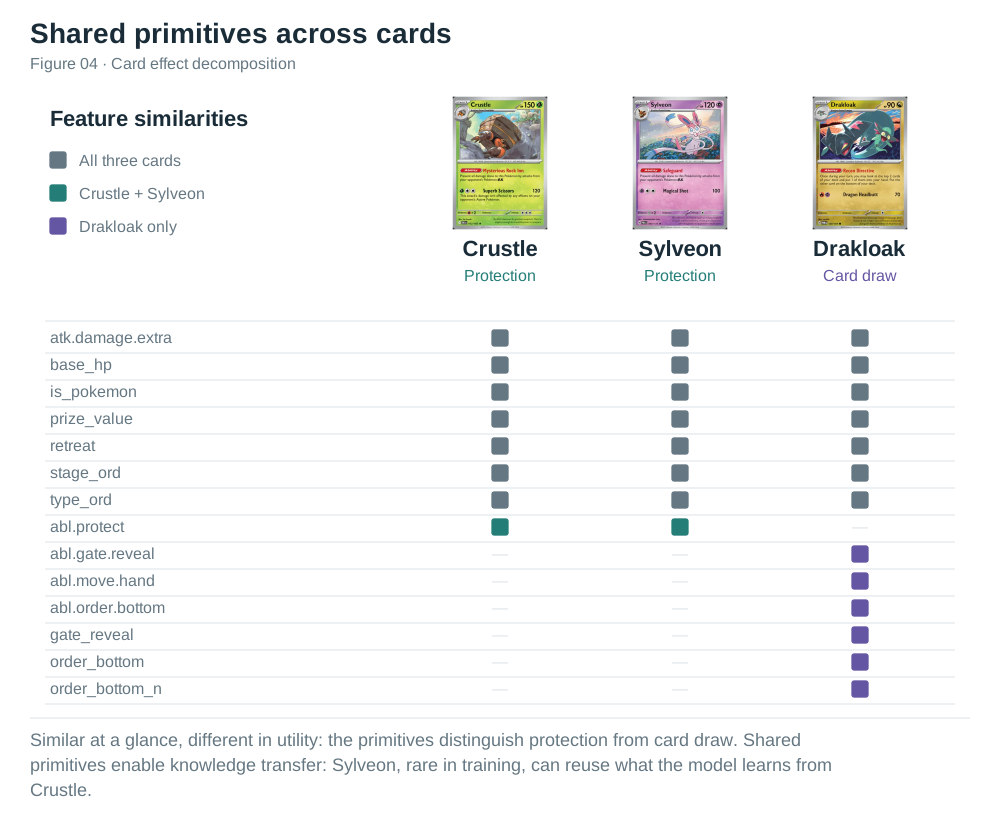
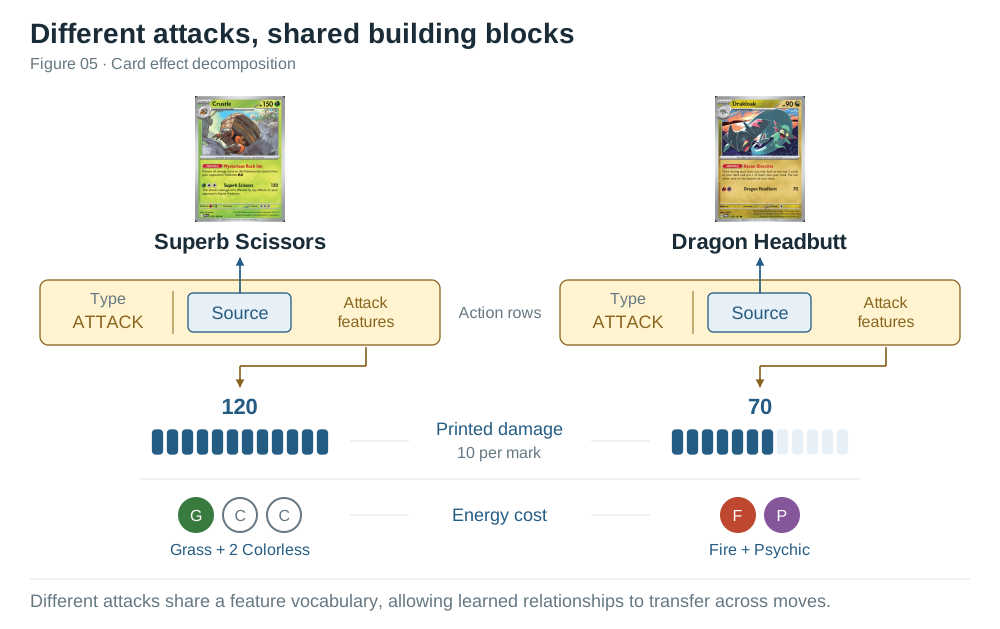
Each card combines printed mechanics, its current state, and a learned identity. Shared effects give unfamiliar cards a representation even without a trained identity vector.
On the card, three Stage 1 Pokémon with an ability and an attack. To the model, Crustle and Sylveon share one shape built on abl.protect, and Drakloak has six features neither has.
Action composition
An action row combines a type, mechanical features, and pointers to relevant cards. The model reads the parts of a choice, not a separate vocabulary entry for every possible combination.
Pre-training
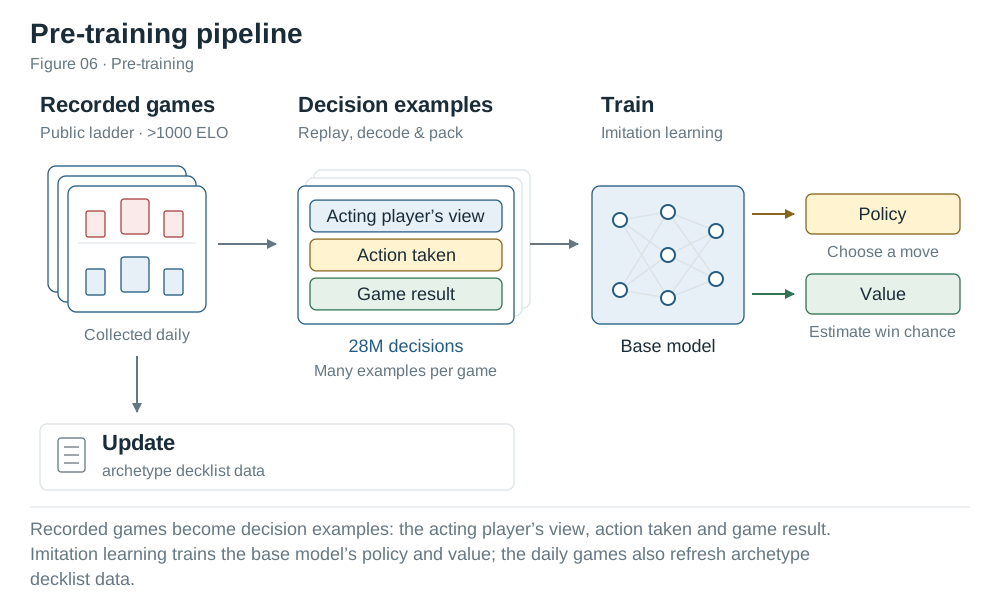
Imitation learning uses public ladder games rated above 1000 ELO. Each decision pairs the acting player’s board view with the action taken. The base model was trained on an NVIDIA RTX 3090.
Submission hyperparameters
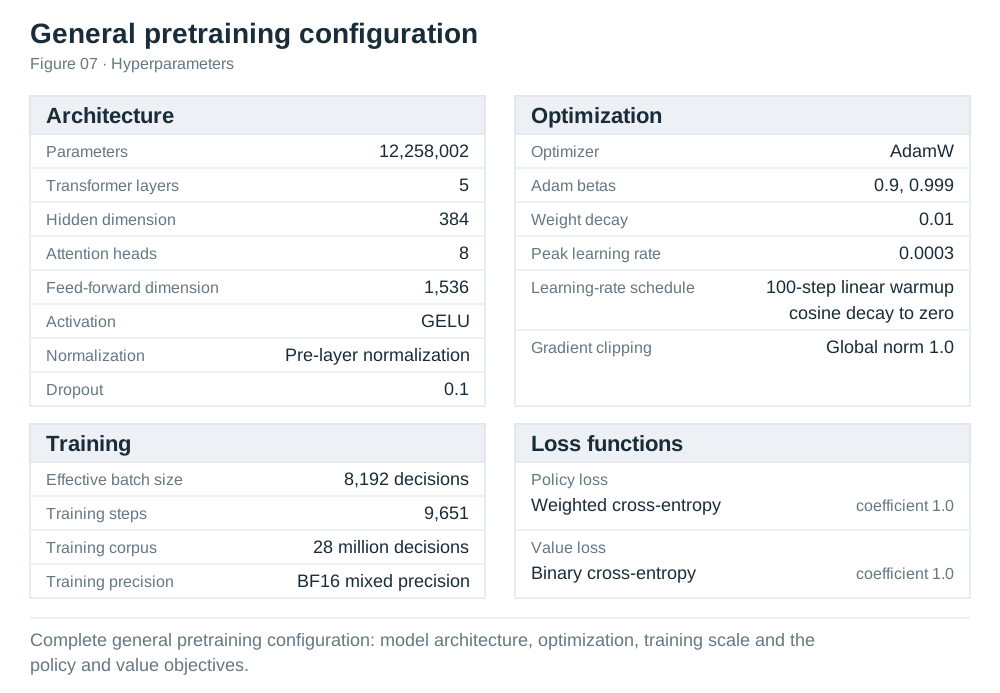
The submitted checkpoint balances capacity against the ten-minute search budget. Search explains how the policy and judge are used; Self-play covers subsequent training.
12.258Mparameters
384model width
5transformer layers
8attention heads
4×feed-forward expansion
10%dropout
The submitted checkpoint’s model shape: 12.258 million parameters, with five transformer layers and eight attention heads.
Card space explorer
These columns compare printed facts, their trained projection, and the card token with its learned identity. The projection is shared across cards; it is not the per-card “Learned” segment above.
Compare cards in three representation spaces—of — cards have no learned identity at all
—
—
Printed facts
The 194 printed facts, standardized
Projected effects
Through the trained 194→64 projection
Card token
Plus the 192-d learned identity
What it does
What it is
The explorer needs the site served over HTTP.
Neighbours are cosine similarity in each space. A neighbour in accent appears in that column only. Cards badged MWO are the 56 Mew World Order cards: ported, never trained on, identity exactly zero.
Inspect the submitted deck’s printed features
The detailed matrix below shows which primitives each card uses.
Every card in the submitted deck that asserts an effect, against the effect primitives it uses: 23 cards, 35 of the table’s 194 columns. A filled cell is a clause the card actually carries. Column numbers refer to the horizontal key below.